Understanding why and how we learn is just as important as what we learn
What knowledge builds:
- Clarity in understanding complex ideas
- The ability to identify what is relevant
- Independent thinking
- More informed and confident decision-making
- Structured and effective problem-solving
- The ability to question assumptions and analyse arguments
- A clearer sense of direction
- Continuous personal development
What knowledge allows you to do:
- Access higher education and specialised fields
- Enter a wider range of careers and professions
- Adapt to different roles and changing environments
- Gain independence in your choices and future path
- Create new opportunities rather than rely on existing ones
- Build something of your own, whether ideas, projects, or businesses
- Understand and navigate systems such as law, education, and work
- Contribute to society in more meaningful and effective ways
- Increase long-term stability and flexibility in life

Why Learning Can Feel Difficult
You’re not the problem.
Struggling to understand or remember things does not mean you lack intelligence. It reflected of how information is structured, presented and processed.
Understanding requires more than simply being exposed to information. When ideas are unclear or disconnected they remain isolated making them harder to recall and apply. The mind relies on patterns and relationships to make sense of knowledge. without them even capable learners can feel stuck.
It is also easy to mistake familiarity for understanding. Recognising something can create a false sense of knowledge but true understanding means being able to recall, explain and apply ideas independently.
Memory is shaped by attention, repetition and meaning. Without active engagement and clear structure information is more likely to fade over time.
Difficulty is not a sign of limitation. It is a signal that the way you are learning needs to change. When knowledge is organised, connected and revisited, it becomes more stable, useful and easier to work with.
Study Techniques
Study techniques are important because they make learning easier and more effective.
1. Active Recall
Instead of reading your notes again and again you try to remember the information without looking.
How to use it step by step:
- Read a section once.
- Close the book or hide your notes.
- Ask yourself questions about what you just read.
- Try to answer from memory.
- Check what you got right and wrong.
- Repeat the difficult parts later.
Why it works:
It trains your brain to retrieve information. This makes memory stronger and helps you remember for longer
2. Feynman Technique
You explain a topic in simple words as if teaching it to a beginner.
How to use it step by step:
- Pick a topic.
- Write its name at the top of a page.
- Explain it in very simple language.
- Pretend you are teaching a child.
- Notice where you get stuck.
- Go back and study those weak areas.
- Rewrite the explanation more clearly.
Why it works:
If you can explain something simply, you usually understand it deeply.
3. Interleaving
You mix different subjects or question types instead of doing only one thing for a long time.
How to use it step by step:
- Choose 2–4 topics.
- Study one topic for a short time.
- Switch to another topic.
- Come back later to the first one.
- Keep rotating topics.
- Practice identifying which method fits which problem.
Why it works:
It improves flexible thinking and helps you learn when to use the right idea.
4. Leitner System
A flashcard system where difficult cards are reviewed more often.
How to use it step by step:
- Make flashcards.
- Put all cards in box 1.
- If you answer correctly, move the card to box 2.
- If wrong, keep it in box 1.
- Review box 1 often, box 2 less often, and so on.
Why it works:
It combines active recall and spaced repetition.
Before you start
- Organize your materials by category or subject so that everything is easy to access
- Prepare your workspace to be clean and free off distraction
- Set a clear goal for what you want to accomplish
- Remove distractions such as notifications or unnecessary tabs
- Prepare snacks and water beforehand (optional)
Common mistakes in learning
Many people struggle not because they lack ability, but because they rely on ineffective methods.
- Rereading without testing memory
- Highlighting without thinking deeply
- Confusing familiarity with understanding
- Studying for too long without breaks
- Focusing on one topic for too long
Find what works for you
The goal is not to follow every study technique. You need to find what method works best for you.
Learning becomes more effective when you adapt your approach and treat the methods as tools rather than fixed rules.
Limitations
Effective methods are not effortless. They require consistency, time and active engagement.
They may feel slower at first, as they demand more effort than passive studying. The effort is what leads to deeper understanding and stronger long term retention.
Beyond studying
Methods are not only useful for studying. They develop ways of thinking that extend beyond academic work and into everyday situations.
By strengthening skills such as analysis, problem solving and independent thinking they can be applied in a wide range of contexts. From education to real world decisionmaking.
To understand complex ideas and grow as a thinker it often begins with three simple questions: why? how? what?
These questions encourage deeper thinking helping to move beyond surface level understanding and develop skills
Develeoping as a Critical Thinker
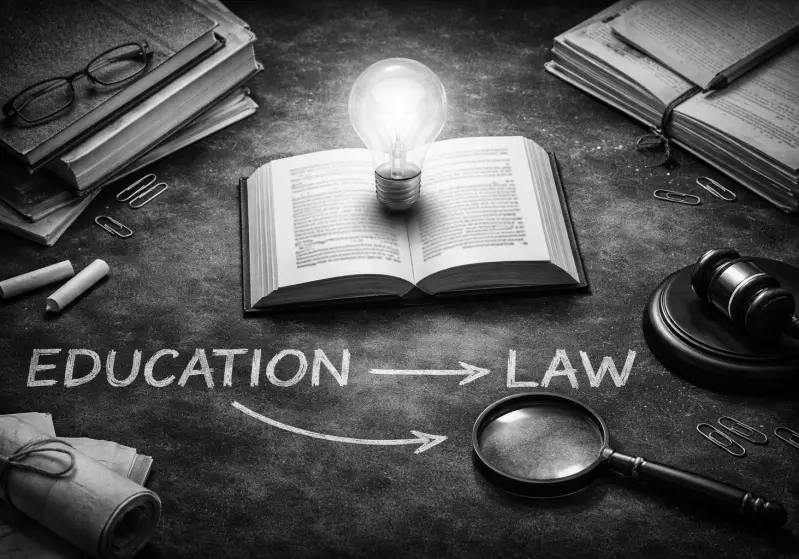
1. Understand the idea clearly
Start by identifying what the argument, issue, or concept actually is. Before analysing something it is important to understand it accurately and in context.
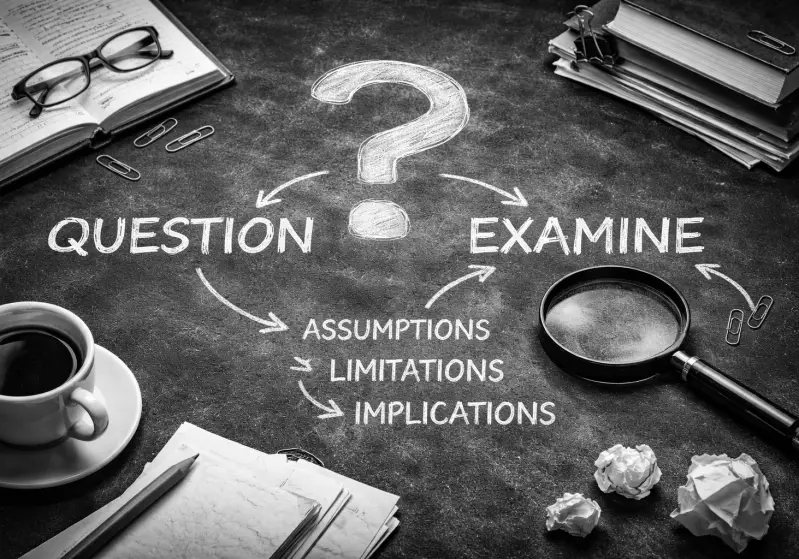
2. Question and examine it
Ask what makes the idea strong or weak. Consider different perspectives, possible limitations and what assumptions it depends on.
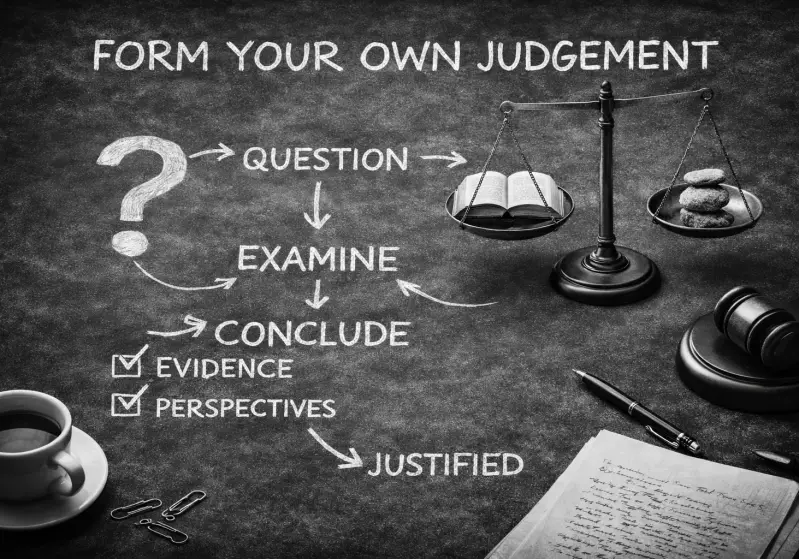
3. Form your own judgement
After examining the issue develop a reasoned conclusion. Critical thinking is not only about questioning ideas but about deciding what you think and why.